Showing posts with label shopping. Show all posts

Friday, 24 August 2018

Montreal, Canada: What Lies Beneath

This article from my first visit to Canada appeared in The Sunday Age newspaper in 2011, but never went online: so here it is. I was hosted on that trip by the Canadian Tourism Commission.

When the architects of Montreal’s underground shopping mall beneath Place Ville-Marie drew up their plans in 1962, they had little idea what they’d started.

As newer malls and office buildings were constructed, they were all linked together. Thus the Underground City was born.

RÉSO, a play on the French word for network, “réseau”, is now the largest underground complex in the world, stretching some 33 kilometres and linking malls, museums, train stations, government buildings and hotels.

All can be reached without ever setting foot in the outside world; a compelling alternative in winter, when temperatures can plunge to minus 15 degrees.

I’m usually allergic to shopping malls, but RÉSO intrigues me and I decide to walk its entire main loop (with a Metro trip in the middle)...

10am. I pause to look up at the statue of a young Queen Victoria in the centre of Square-Victoria, then spot the RÉSO entry sign and head down the rabbit hole. Below ground, I enter a long, strangely curved brick-lined tunnel, its curves accented by wavy tracks of lights in the ceiling.

10.25am. Nearing Place Bonaventure, I’m surprised to realise I’m back at street level, as I can see manicured lawns out of the occasional window. Soon after I descend into the ominous-sounding Le Passage. It’s pure 1970s down here, with exposed concrete walls and stained timber handrails.

10.50am. After twists and turns, I emerge into the lofty hall of the Gare Centrale, Montreal’s main train station. Above me there’s a magnificent bas-relief frieze depicting stylised figures engaged in everyday activities with a 20th century gender bias - men working in construction or playing lacrosse, women teaching or planting trees.


11.15am. I’m heading into prime retail territory now, up pebble-dash steps into a sunlit atrium with a low glass ceiling. There’s a cafe beneath the glass, dotted with low black couches on which shoppers lounge. It’s surrounded by shops, and I realise this is Place Ville-Marie, the mall that started it all.

11.25am. A few more turnings and I’m beneath Rue Ste-Catherine, Montreal’s major shopping strip. Above me towers the upmarket Centre Eaton, the largest shopping mall in the city, with 175 stores over four levels surmounted by a vast glass roof.


11.35am. I catch a train from McGill Metro station to Place-des-Arts. At the end of the Place-des-Arts station concourse is a huge and beautiful backlit artwork depicting Montreal’s musical history across multiple glass panels.

12 noon. Entering the Musée d’Art Contemporain from beneath, I encounter a huge wall projection called Le Tournis, in which a camera spins dizzyingly around the centre of a room while glass smashes loudly between the foreground and the far wall. Oddly, its unrefined chaos makes a refreshing counterpoint to the controlled nature of the Underground City.

12.30pm. After the art, it’s startling to return to RÉSO and enter the Complexe Desjardins’ vast terraced shopping mall. At ground level there’s a fountain with a 30 metre high jet that almost grazes the lofty skylight. I wonder whether the settings have ever slipped, resulting in a soggy ceiling.

1pm. Back above ground at Square-Victoria, I discover the morning’s clouds have departed and it’s turned into a perfect day - bright, sunny and warm. The perfect day, ironically, to be outdoors.

Saturday, 23 June 2018

Review: Sage Hotel Melbourne, Ringwood


For this review I was hosted by the Sage Hotel Melbourne, Ringwood.

If you ask inner-city Melburnians what they think of the eastern suburb of Ringwood, be prepared for some wrinkling of noses. The district had a bad rep in years past, of being somewhere poor and dodgy.

So it was with some surprise that I stepped out of Ringwood train station yesterday, to find the area north of the railway had been transformed by the rebuilding of the Eastland shopping centre.

It's still very outer-suburban - a huge mall with plentiful chain stores - but the frontage has been transformed into an attractive public square lined by restaurants with outdoor seating.

Next to this is Realm, a new public building which includes the local library.

And on top of the shopping centre, though entered from the main road, is the new Sage Hotel.

It's an eye-opener. One doesn't expect much from suburban hotels, but the Sage is impressive by any standard.

My room is compact but attractive, with a sleek modern look. The big windows face the Dandenong Ranges, so there's a lot of natural light and a view beyond the nearby suburban streets.

The room has a practical set-up, with a useful desk and a straightforward bathroom area. The hanging zone for clothing is open and a bit constricted, but otherwise there's sufficient space to move.


Where the hotel really stands out is in its public areas. The area beyond reception is one big open space, artfully divided by long open-sided bookshelves stacked with works ranging from art volumes to thriller novels.

The largest area is a combination of lounge, bar and co-working space. Alongside the comfortable lounge chairs is a number of desks which guests can use, and which are also available for hire by business people wanting a temporary workspace.


Opposite the lounge area is the restaurant, Partake. This is another open space, with a range of tables from banquettes to high tables. There's some impressive art on the walls, and even more impressive food on the menu.

To give you an example, last night I had this for dessert: the raspberry and strawberry mess with meringue, crème légère and Persian fairy floss.

It was excellent, and a symbol perhaps of how much Ringwood has changed.

And with its proximity to the Dandenong Ranges and the Yarra Valley, the Sage Hotel has a lot to offer tourists, as well as business people and hungry locals.

The Sage Hotel is located at 211 Maroondah Hwy, Ringwood, Australia. For more info and bookings, visit its website.

Friday, 8 June 2018

Mind Your PMQ: Hong Kong's Design Hub

I was hosted on this trip by the Hong Kong Tourism Board.

When I visited Hong Kong last year, I spent an afternoon at PMQ.

Opened in 2014, this arts and design hub is housed within the former Police Married Quarters from the British colonial era.

The complex contains workshops, galleries, pop-up shops and food outlets, housed within two seven-storey blocks remaining from the original institution.

These wings are linked by a modern structure called QUBE, which has a rooftop garden.

It's interesting to wander around the complex, up and down between the floors. There's always something new to see in each shopfront.


For an article I was writing, I talked to some young designers who were able to get a start in otherwise-expensive central Hong Kong by taking on a shop in PMQ.

One, Coney Ko [pictured left], designs and sells jewellery with a retro look reminiscent of Art Deco. Another, Yeung Chi, is an award-winning fashion designer.

It's a fascinating place to visit, both for its outlets and its heritage. To learn more about the latter, you can join a regular free PMQ Heritage Interpretation Guided Tour.

For tour bookings and more information, visit the PMQ website.

Friday, 27 January 2017

NSW Summer Series: Northern Rivers

Through January, I'm running a series of my previously published print articles about New South Wales. 

In 2010 I visited the Northern Rivers region of the state, courtesy of Northern Rivers Tourism. This is what I found...


When American author Norman Maclean wrote A River Runs Through It in the 1970s, he had in mind the US state of Montana. But his book’s title could well be applied to the Northern Rivers region of New South Wales.

Stretching from the broad banks of the Clarence River up to the Queensland border, this green region is threaded by numerous waterways, from humble creeks to mighty rivers.

It’s famous for its sandy Pacific coastline, which contains popular beach holiday towns such as Byron Bay. These places, though no longer sleepy, offer all the usual Aussie beach holiday pursuits of swimming, surfing, sunbathing... and sitting outside a pub with a drink at hand, not doing much at all.

However, the region’s interior is less crowded and also worth exploring, with its mix of subtropical rainforest, craggy mountains formed from ancient volcanoes, and small towns that have been re-energised in recent years by an influx of creative types seeking tree changes at an affordable price. As a result, they’re littered with good food outlets, quality accommodation and quirky shops.

With that pick-and-mix contrast of subtropical weather, interesting towns and extensive beach frontage, the region sounds like a good place to go in search for greenery, relaxation and good food.

Grafton

I've safely traversed the quirky iron bridge that soars above the Clarence River, before taking an unexpected bend as it angles down toward this inland city.

After that small adrenalin rush, I have an agreeable dose of calm here in the garden courtyard of Georgie’s, a restaurant within the Grafton Regional Gallery (158 Fitzroy St).

This 1880 building was once a doctor’s residence and a small hospital, the residence up front and the hospital at the rear. There’s currently a Ken Done exhibition within the gallery, which seems fitting as the artist lived in the area as a kid.

I’m more focused at the moment on the art of food, served to my table in the courtyard. On this balmy evening it’s an extremely mellow space, with a pleasant breeze wafting through the dimly-lit dining area, and fairy lights arranged around its perimeter. There are tables indoors, but why would you want to sit there on a night like this?

The food is a pleasant surprise. It wasn’t that long ago that it was hard to get a high quality meal in a country town this size, but the kitchen turns out a succession of dishes the equal of any city restaurant, with an emphasis on produce from the region. On today’s menu, there are prawns from coastal Yamba, haloumi from the Tweed Valley, and oysters from the Nambucca River.


Bangalow

Everyone knows about the popular beachside town Byron Bay, but fewer have heard of Bangalow. Byron Bay’s more sedate sister is located just a few kilometres inland, but has a completely different feel to the hedonistic coastal bustle of Byron.

The main street, once part of the Pacific Highway but now pleasantly unhurried, is lined with attractive buildings that mostly look as though they were built sometime between the late 19th century and the mid-20th.

Everything you’d expect of a village is present - a red-brick post office, an old pub, even some surviving red wooden phone boxes.

Though it does have regular shops serving local residents, Bangalow is also littered with the fancy little boutiques associated with upmarket holiday towns. As one local resident tells me, it gives visitors to Byron Bay something to do on rainy days.

Among the retail therapy options are Indian furniture emporium Wax Jambu (19b Byron St), and the art-dealing Barebones Art Space (44 Byron St).


Byron Bay

And finally to Byron. The first impression I have of this town is of bustle - actually a mixture of bustle and informality, as the streets are packed with people wearing not much more than bathers and thongs.

They’re bustling, but at a measured pace (if that makes sense).

To be honest, the town isn’t much to look at, as its streetscape is overwhelmed with commercial signage on fairly featureless modern buildings. But at the end of the main street is Byron Bay’s chief asset, its fine sandy beach, and this has been worth waiting for.

It’s a cracker, a long curling stretch of sand between prominent headlands, one of which is topped with Byron’s postcard-happy lighthouse. Loads of people are swimming and sunbathing today, and there’s an air of mellowness about the place.

Lunch is at the Beach Byron Bay (Clarkes Beach, Lawson St). It was once a humble beachside shack that went to seed, then was regenerated into a modern restaurant with a view directly onto the beach. The food is excellent, with yet more seafood and an emphasis on share plates.

The sharing concept is clearly a hit, as there are a lot of groups dining together on the deck section of the eatery. There’s something very “modern Australian” about this scene, the way the place melds beach informality with the craft of fine food.

I like it; in fact I’d say there’s a wave of relaxation breaking over me right now.

Friday, 20 January 2017

NSW Summer Series: Sydney Light Rail (Part 2)

Through January, I'm running a series of my previously published print articles about New South Wales. 

Last post, I started on a trip along Sydney's light rail line in 2011. Now the journey continues...


Tram Stop: Fish Market

As I step out of the tram, I can smell the faint aroma of seafood wafting up from the Sydney Fish Market. It’s a fascinating place, still a working market but also a place for visitors to drop by to enjoy a meal.

Its perimeter is dotted with shops both selling seafood to take home, and serving fish meals. On the waterfront, Claudio’s (Bank St) is packed with people browsing large trays of prawns on ice, oysters, and other marine edibles.

A nearby boardwalk runs along Blackwattle Bay, where stubby floating quays serve serious-looking fishing boats decked out with crates and nets.

The boardwalk is set with fixed tables in front of a strip of eateries, and dotted with people eating, and taking in the bay and the industrial relics along the shoreline. I’m struck by the array of dishes they’re sharing, from straightforward fish and chips, to meals best tackled with chopsticks.

The market’s a pleasant spot to visit, but I’m pleased to see it’s not as tarted up as similar precincts throughout the world; there’s still a rough-edged authenticity to the place. 

Tram Stop: Paddy’s Markets

As the name suggests, this stop serves the famous markets which have been located in Haymarket since the early 19th century.

On the other side of the rails, however, is Sydney’s Chinatown, and I’m interested in trying out a regional cuisine I’ve never before encountered.

Following busy Dixon Street through Chinatown to its quieter northern end brings me to Uighur Cuisine (2 Dixon St), a restaurant serving dishes from China’s northwestern Xinjiang province.

Being largely Muslim and connected by cultural ties to Central Asia, this part of China is quite different to the eastern regions that Australians are more familiar with. The Uighurs have produced a cuisine that’s distinctly different from what we usually think of as Chinese food.

The interior of the restaurant is that of a suburban ethnic eatery, down to the stark lighting, plastic vine leaves strung across the ceiling, and a bouquet of artificial flowers on the paper “cloth” across my table.

The images on the menu have an emphasis on lamb dishes, and so I order the goshnan, a kind of lamb mince pie, along with a salad of transparent noodles threaded with capsicum slices and a spicy red sauce. With a dash of vinegar or soy sauce from the bottles on the table, it’s a tasty meal.

As exotic music plays over the restaurant’s speakers, I chew happily while watching spectacular flashes of flame occasionally light up the open kitchen.

Other Attractions

There are many other sights located along the Metro Light Rail line, including the Capitol Theatre (tram stop: Capitol Square); the Powerhouse Museum (tram stop: Paddy’s Markets); the Chinese Garden (tram stop: Exhibition Centre); Darling Harbour restaurants, shops and museums (tram stops: Convention and Pyrmont Bay); and the casino (tram stop: The Star).

For more information about Sydney's light rail service, visit this section of the Transport NSW site.

Friday, 13 January 2017

NSW Summer Series: Sydney Light Rail (Part 1)

Over the rest of January, I'll be running two of my previously published print articles about New South Wales, Australia.

This article was first published in 2011, so some details may have changed. However, as Sydney is currently in the process of expanding its single tram line into a larger network, it seems apt to revisit attractions along the route of the existing light rail service...


“He shot through like a Bondi tram!”

It’s fading now, but this colourful expression was part of the Australian idiom for many decades, meaning to depart at high speed. Whether Sydney trams were ever that fast is another question; but since the city’s tramways were closed in the 1960s, there’s been little chance to find out.

Which is a pity, as around the world trams are back in fashion for their environmental positives. They’re also a tourist attraction in themselves, in cities as diverse as San Francisco, Lisbon and Melbourne.

There is, however, one exception - Sydney’s Light Rail, which opened in 1997 and runs along the route of a disused goods line that once snaked through the industrial suburbs of the inner west.

Though overshadowed by the big-ticket tourist attractions on Sydney Harbour, the tram line is a microcosm of Sydney, taking in restaurants, tourist districts, cultural attractions, neighbourhood shopping strips and suburban parks.

It’d appeal to anyone who’s been to Sydney more than once and is looking for something new - and today, that’s me. Stepping aboard at Central Station, I set out to discover some of the city’s lesser-known attractions at the stops along the way.

Tram Stop: John Street Square

Passing up the restaurants and museums by the tram line’s initial stops, I head onward to Pyrmont, to a cafe I’ve been told is a great place to have breakfast.

At this point the line lies within a deep cutting, and its rough-hewn stone walls add an unexpected dash of grandeur.

At the top of a steep flight of stairs (where I belatedly discover a lift) is Harris Street, an appealing collection of weathered buildings that speak of Pyrmont’s working-class past.

On one corner there’s a dilapidated old shopfront with a pitched roof, and opposite it is the atmospheric facade of the Terminus Hotel, clearly closed for decades and covered with old beer ads and a tracery of ivy.

A few doors down from these relics is Bar Zini (78 Harris St), a symbol of the gentrification of this area. Slotted into a narrow shopfront, it’s a light modern space with dark timber furniture, exposed floorboards and a long counter, a modern Australian take on the classic Italian cafe.

From the short breakfast menu I choose a panino filled with double smoked ham, tomato, fontina cheese, basil and tomato salsa. It’s basically a fancy version of a toasted ham and cheese sandwich - and it’s very tasty.

Tram Stop: Jubilee Park

From this stop I have a great view over a suburban gem that tourists seldom visit - the perfect circle of Jubilee Park, an old-fashioned cricket ground with a white picket fence and dainty pavilion, nestled within the curve of the old railway viaduct which carries the tram line.

Beyond the park is Rozelle Bay, one of the many nooks of Sydney Harbour. It’s a pleasant walk past the cricket ground and through Bicentennial Park, a former industrial space that was redeveloped as waterside parkland in recent years.

The view from the waterline is a snapshot of the area’s history, with neatly manicured greenery on one shore and a collection of shipyards and old factories on the other, including huge silos in the direction of the modern ANZAC Bridge. I sit on a bench with a view over the water, enjoying this haven, a quiet space on a weekday morning.

Tram Stop: Glebe

Backtracking, I step out at Glebe, whose tram stop opens onto a fascinating streetscape of sandstone ex-warehouses beneath a narrow park set into a cut, with a row of terrace houses high above.

A short walk away is Glebe Point Road, an attractive shopping strip lined with genteel terrace houses and lush gardens on one side, and shops on the other.

In the 19th century shopfronts there’s both the old and new: retro furniture shops, classy fashion boutiques, sushi outlets, Thai restaurants, discount stores, antiques emporiums and day spas. It has a village atmosphere, but one updated for the 21st century.

I walk along to Gleebooks (49 Glebe Point Rd), a renowned independent bookshop that’s a veteran of the strip and the host to many literary events. Inside, the lofty interior is crammed with volumes, the shelves taking up every part of the shop floor that isn’t necessary for customer access.

Browsing the stock, I’m pleased to spot two novels by my favourite British humorist, PG Wodehouse. In the self-help section in the centre, my eye is drawn to titles such as Hamlet’s Blackberry and Why We Lie; and I can’t help smiling at a copy of Stuff White People Like, a humorous poke at the tastes of people who live in gentrified suburbs just like Glebe.

[Next post: Fish out of water, and dishes of the East...] 

Friday, 12 February 2016

My Pretty Woman Moment: Trouser Shopping in LA

Pretty woman, walking down the street
Pretty woman, the kind I like to meet
Pretty woman
Roy Orbison clearly wasn't singing about me, nor did Julia Roberts base her performance as Vivian Ward in the movie Pretty Woman on my life.

But aside from me not being pretty, nor a woman, nor a high-class prostitute, our shopping experiences in Los Angeles are uncannily similar.

Let me explain.

On my recent trip to the USA, I did something I never usually do - I packed an old pair of casual trousers (cargo pants, in fact).

Because I travel so light, I'm usually very disciplined about this. I'll make a point of buying a brand-new pair of casual trousers to be packed alongside one more formal pair, because I don't want to deal with them falling apart while I'm on the road.

This is for two main reasons:
  1. I'm usually travelling on a packed itinerary, making it hard to carve out shopping time;
  2. I'm a big guy who usually needs to buy clothing from specialised larger-size clothing stores.
So. On my second day in LA, I lent over to do up my shoelaces and heard an ominous rip. The cargo pants had reached their use-by date. Now what?

I put on the more formal pair of "good" trousers, of course, but I couldn't go the entire three-week trip wearing those. From time to time I'd need to do laundry, and the thought of standing in a laundromat wearing bathers (my only other option) while the trousers were in the machine was not appealing.

I'd have to buy new trousers. But where? The only free time I had was after visiting a new Australian-run cafe in the Fairfax district near West Hollywood, so I needed a shop in that part of the city. And it had to be one that definitely stocked large sizes.

I searched Google Maps, and it came up with one obvious option: a specialist menswear store in Beverly Hills.

Gulp. Beverly Hills?

For those not aware, Beverly Hills is home to Rodeo Drive, one of LA's most expensive and exclusive shopping areas.

So I inspected the cafe, then caught an Uber car to Beverly Hills.

This is where it started to go Julia Roberts. The efficient attendant at the menswear store, alerted to my preference for simple casual trousers, started bringing out jeans. Simple jeans. Faded jeans. Jeans pushing $200.

So I swallowed my pride and asked for a pair of the least expensive casual trousers in the shop. I swear the temperature in the shop dropped a distinct number of degrees at that point.

It was sort of a reverse Julia Roberts, now I think of it, as my initial rating as a wealthy customer had now been downgraded a few notches.

The attendant followed my bidding, however, and I ended up with a comfortable pair of black cotton Ralph Lauren trousers for a bit over $100.


That was way more than I'd usually pay for casual wear. But I must say though, you get what you pay for. They are extremely comfy.

So that was my Pretty Woman moment. May you ever be spared a similar ordeal.

Take it away, Roy:


Disclosure: I stayed in LA as a guest of the Los Angeles Tourism and Convention Board, though I paid for my own airfare to the USA.

Friday, 11 December 2015

One Trip, Multiple Stories: A Travel Writer's Journey to Europe & the USA

For the journey detailed below, I paid for my airfares and received on-the-ground assistance from local tourism authorities and hotels. Full disclosures are included with each linked article and blog post.

This is my 400th post at Aerohaveno. Eight years ago I started this blog, somewhat reluctantly, then realised it was a valuable additional outlet for my travel writing.

I've managed to keep the output consistent over that time, averaging precisely 50 posts per year. Often I post about topics which I haven't been able to cover in my work for newspapers, magazines and websites.

For the 400th post, I'd like to do something a little different - draw back the curtain on the mechanics of my trade.

Focusing on a four-week travel writing research trip I undertook in 2014 to Europe and New York, I'll outline how each activity led to a specific piece of writing - with a link to the published article or blog post.

Are you sitting comfortably? Then we'll begin.

Thursday 21 August 2014

Activity: Fly Qantas flight QF9 from Melbourne to London Heathrow.
Resulting story: A 'Flight Test' review of Qantas' Premium Economy class for the Traveller section of Fairfax Media's Saturday newspapers in Australia.

Activity: Check out the Qantas First Class lounge at Melbourne Airport before the flight.
Resulting story: A review of the lounge, here at Aerohaveno.

Saturday 23 August 2014


Activity: Visit London's Cartoon Museum for an exhibition of World War One cartoons.
Resulting story: A 'Postcard from London' piece for the Spectrum (culture) section of The Age newspaper in Melbourne.

Sunday 24 August 2014


Activity: Visit Abbey Road, West Ham, to investigate local attractions.
Resulting story: An article on the "wrong" Abbey Road, for the Traveller section of the Sun-Herald newspaper in Sydney.

Activity: Take the Gentleman's Afternoon Tea at The Athenaeum Hotel, Mayfair.
Resulting story: A blog post about the experience, here at Aerohaveno.

Monday 25 August 2014

Activity: Visit Hampton Court Palace, to check out the newly reopened chocolate kitchens.
Resulting story: An article on the experience, for the Traveller section of the Sun-Herald newspaper in Sydney.

Tuesday 26 August 2014


Activity: Eat at restaurants in Cardiff, Wales, which specialise in dishes using locally-sourced ingredients.
Resulting story: An article on Cardiff dining for the Traveller section of Fairfax Media's Saturday newspapers in Australia.

Activity: Visit the Doctor Who Experience, Cardiff Bay.
Resulting story: A review of the exhibition, here at Aerohaveno.

Wednesday 27 August 2014


Activity: Explore Cardiff's Victorian-era shopping arcades.
Resulting story: An article on the various arcades and their charms, for the travel section of the Sunday Age newspaper in Melbourne.

Thursday 28 August 2014

Activity: Check into the Ibis London Blackfriars.
Resulting story: A review of the hotel, here at Aerohaveno.

Friday 29 August 2014


Activity: Join the Eating London Tour from Spitalfields Market, London.
Resulting story: An article on the tour's food highlights, for the travel section of the Sunday Age newspaper in Melbourne.

Saturday 30 August 2014


Activity: Investigate several unusual aspects of the London Underground.
Resulting story: An article on secrets of the London Underground, for the Traveller.com.au website.

Sunday 31 August 2014

Activity: Catch Eurostar train from London to Brussels, Belgium (then later on to Cologne and Berlin).
Resulting story: An article on the rail journey and the cities visited, for Get Up and Go magazine.


Activity: Visit the Mini-Europe theme park in Brussels.
Resulting story: An article on the park's quirky appeal, for the travel section of the Sunday Age newspaper in Melbourne.

Monday 1 September 2014


Activity: Visit the Waterloo battlefield outside Brussels.
Resulting story: An article on the 200th anniversary of the Battle of Waterloo, for the Lonely Planet website.

Activity: Explore central Brussels.
Resulting story: An account of my experiences of the city, here at Aerohaveno.

Wednesday 3 September 2014


Activity: Visit Museum Ludwig in Cologne, Germany.
Resulting story: An article on the museum's impressive modernist collection, for the travel section of the Sunday Age newspaper in Melbourne.

Activity: Soak at the Neptunbad baths, Cologne.
Resulting story: A review of these historic baths, here at Aerohaveno.

Thursday 4 September 2014

Activity: Explore central Berlin, Germany.
Resulting story: An account of my wander from the Hauptbahnhof to the Hotel Adlon, here at Aerohaveno.

Friday 5 September 2014


Activity: Join a tour of Berlin street art, led by an artist.
Resulting story: A 'Postcard from Berlin' piece for the Spectrum (culture) section of The Age newspaper in Melbourne.
Second resulting story: A blog post about Berlin's street art, here at Aerohaveno.

Saturday 6 September 2014


Activity: Explore the remnants of the Berlin Wall along Bernauer Strasse.
Resulting story: An article on the Berlin Wall Memorial, for the travel section of the Sunday Age newspaper in Melbourne.
Second resulting story: A blog post for the 25th anniversary of the Berlin Wall's fall, here at Aerohaveno.

Monday 8 September 2014

Activity: Fly British Airways flight BA173 from London Heathrow to New York JFK.
Resulting story: A 'Flight Test' review of British Airways' Premium Economy class for the Traveller section of Fairfax Media's Saturday newspapers in Australia.

Activity: Check into the Z Hotel, Queens.
Resulting story: A post about the rooftop bar's amazing view of Manhattan, here at Aerohaveno.

Tuesday 9 September 2014


Activity: Visit Little Collins, an Australian-run cafe in Manhattan (and four others in the following days).
Resulting story: An article on Aussie cafes of Manhattan, for the travel section of the Sunday Age newspaper in Melbourne.

Wednesday 10 September 2014


Activity: Visit the newly-opened Morbid Anatomy Museum, Brooklyn.
Resulting story: A 'Postcard from New York' piece for the Spectrum (culture) section of The Age newspaper in Melbourne.

Activity: Take a cruise to Ellis Island.
Resulting story: A review of the island's immigration museum, here at Aerohaveno.
 
Thursday 11 September 2014

Activity: Explore the Bushwick neighbourhood of Brooklyn.
Resulting story: An article on the attractions of the area [accepted but as yet unpublished].

Friday 12 September 2014


Activity: Visit the newly-reopened Queens Museum in Flushing Meadows.
Resulting story: An account of the museum and its history, for the Traveller section of the Sun-Herald newspaper in Sydney.

Saturday 13 September 2014


Activity: Join the Greenwich Village Literary Pub Crawl, a regular literary tour.
Resulting story: An article on the tour, for the travel section of the Sunday Age newspaper in Melbourne.

Monday 15 September 2014

Activity: Fly Qantas from New York JFK to Los Angeles (then home to Australia).
Resulting story: A review of Qantas' Premium Economy class, here at Aerohaveno.

I also wrote two general blog posts about a selection of quirky New York elements:
And that's that! Courtesy of the International Dateline, we arrived home on Wednesday 17 September 2014 - just short of four weeks since we'd left.

Writing output, financial income

By my count, the trip produced a total of 20 paid articles for outside publications, and 14 posts on this blog.

If you're interested in the business side of such things, I calculate the paid articles (less the one unpublished piece) earned a total of $9727.30 before adding GST (sales tax) for both words and photos.

About another $400 should come in from the final article, taking it over the $10,000 mark. And there was additional research undertaken on the trip which I may yet write about, as well as revisiting subjects in a fresh way.

The blog posts don't earn any direct income, but drive traffic to Aerohaveno and thus contribute to the occasional small payments I receive from the Google Ads running on my blog.

Expenses

Of course I had sizeable expenses on such a journey, especially in New York where I received less assistance re hotel accommodation.

Including airfares, I estimate my total expenses on this trip at $6450, which leaves a profit of about $3677 (plus possible income from future stories derived from the same research material.)

Some trips have a greater return on outlay, others less so. This one had higher expenses than I usually incur, mostly because I paid for my own flights; but was a great experience and turned up lots of interesting travel articles.

It's not easy to make a living from travel writing; but if you can wring a story a day from a trip, you're off to a decent start.

Having typed all that, I feel exhausted! I'll be giving Aerohaveno a rest over the holiday season, and will be back with you in early January. Have a great New Year!

Friday, 4 December 2015

Lost in the Souq of Muscat, Oman

I travelled to Muscat as a guest of Oman Tourism.

Muscat, the capital of Oman, is in many ways a modern city. Its low-rise buildings sprawl along the coast of the Gulf of Oman, on the eastern end of the Arabian peninsula.

As a result, it's difficult to get around without driving. But there is one district that's eminently walkable - the old port of Muttrah.

Sitting on a curving harbour and backed by craggy hills, Muttrah is in a scenic location...


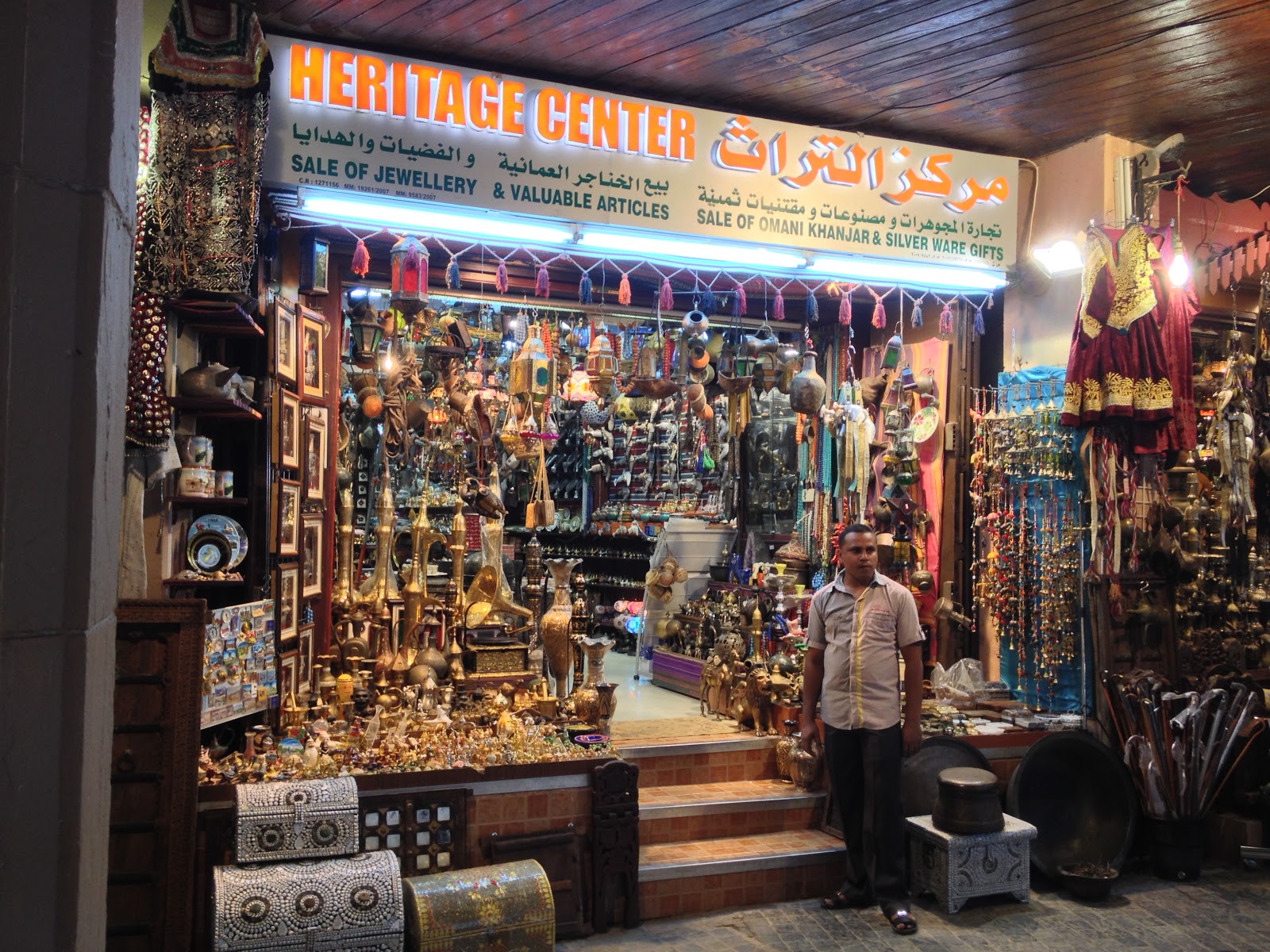
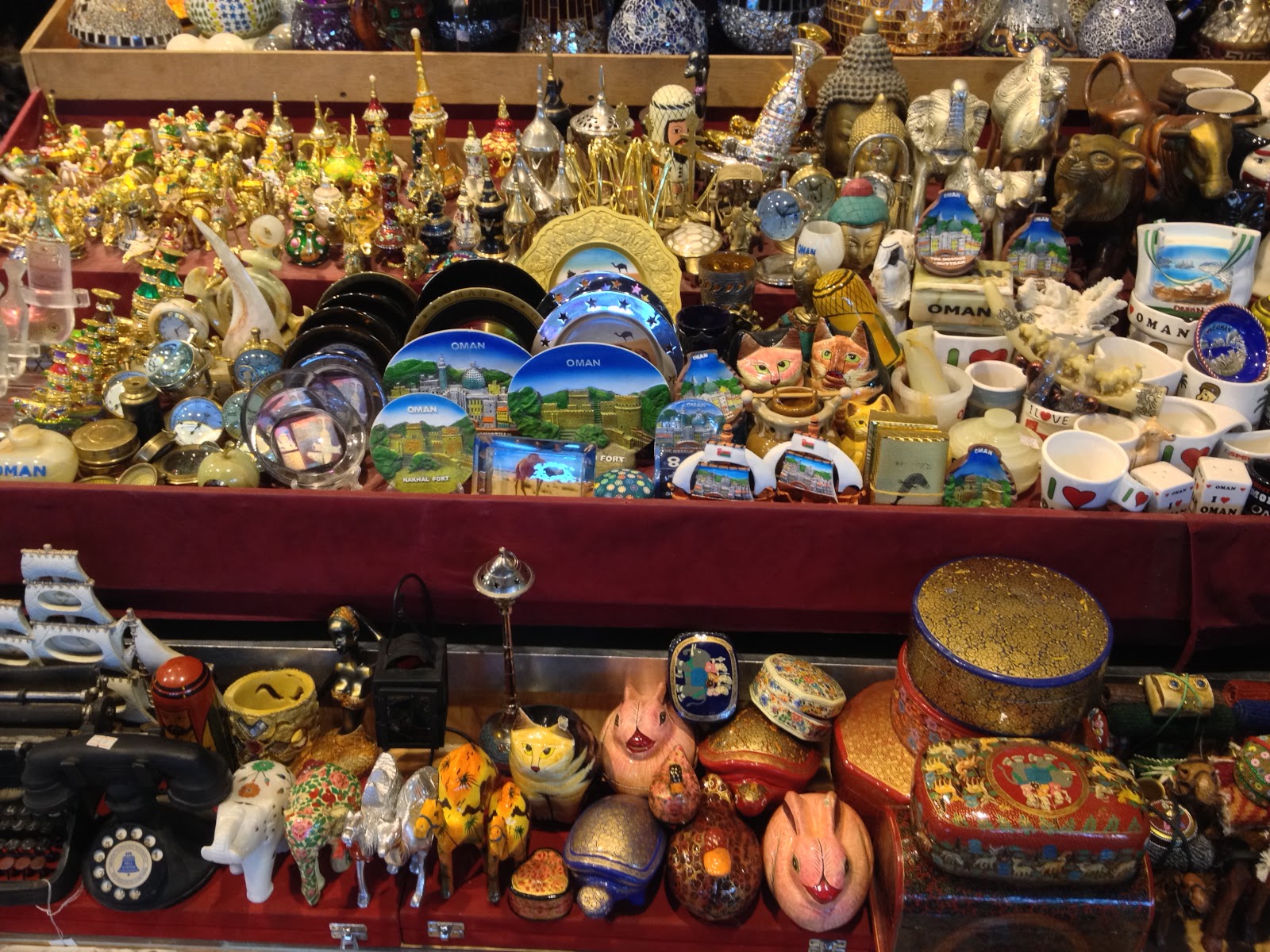
... and the gem at its centre is the 200 year old Muttrah Souq. A covered market with shop-lined passages winding in and out from its centre, it's a fascinating place for a wander.

Visiting it none afternoon, I headed away from its tourist-friendly centre toward the Gold Souq section. This is what I saw on the way...


... and then, following a curving passage, I popped out into an alley and daylight:


It took a bit of walking and a certain amount of confidence to find my way onward to the main road from here (I didn't want to retrace my steps).

But, following locals who looked like they knew what they were doing, I had an intriguing glimpse of the secret life of Muttrah.