Friday, 22 April 2016
A Journey Through Oman - Article by Article
As a freelancer I write for a variety of publications, with articles appearing at random intervals.
Because of this, the pieces I write about a particular trip will be published over a stretch of time in various places, so there's no connection between them for the casual reader.
I know how the jigsaw pieces fit together, though. And with a bit of luck, the resulting articles end up as a fairly complete document of a particular trip.
Here's an example, from a May 2014 media tour I joined in Oman.
1. I reached the capital, Muscat, via an Omanair flight from Bangkok, which I reviewed for Fairfax Media's Traveller section: http://www.traveller.com.au/flight-test-oman-air-economy-39i3f.
2. The backbone of the itinerary was a journey by 4WD vehicle from the capital Muscat through the Al Hajar mountains to Jabal Akhdar, then down again via desert terrain to a turtle-watching location on the Indian Ocean coast.
You can read about that journey here, in Issimo Magazine: http://m.issimomag.com/a/161/omans-road-less-travelled-tim-richards.
3. The highlight in the mountains was the brand-new Alila Jabal Akhdar resort, which had just opened the weekend we arrived. Here's what it was like, via my review for Traveller: http://www.traveller.com.au/alila-jabal-akhdar-review-oman-an-environmentally-sustainable-mountain-resort-for-the-discerning-11ays4.
4. The Issimo article ended with me about to encounter sea turtles laying their eggs by moonlight. Here's what happened next, as recounted for Fairfax's Sun-Herald newspaper: http://www.traveller.com.au/postcard-turtles-hatching-in-oman-3euu8.
5. When we arrived back in Muscat after the turtle-watching, we stayed at the posh Shangri-La resort, which I reviewed in this blog: http://aerohaveno.blogspot.com.au/2014/05/the-bed-report-8-shangri-la-muscat-oman.html.
6. One night in Muscat I attended a noisy percussion-based concert at the glamorous Royal Opera House Muscat, a pet project of Oman's ruler Sultan Qaboos bin Said Al Said. I wrote about it for the Sun-Herald: http://www.traveller.com.au/royal-opera-house-muscat-in-the-heat-of-the-night-12z3b1.
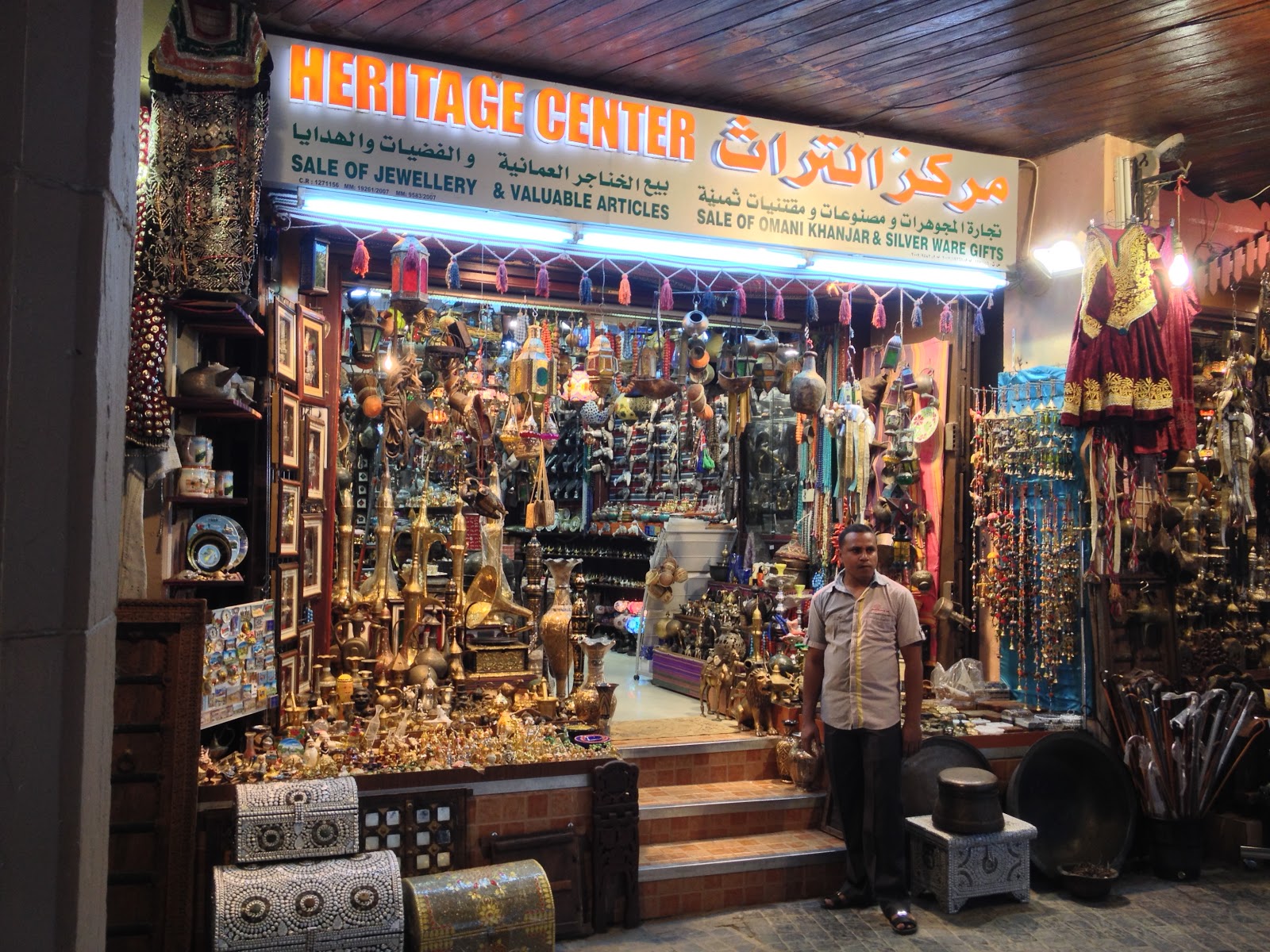
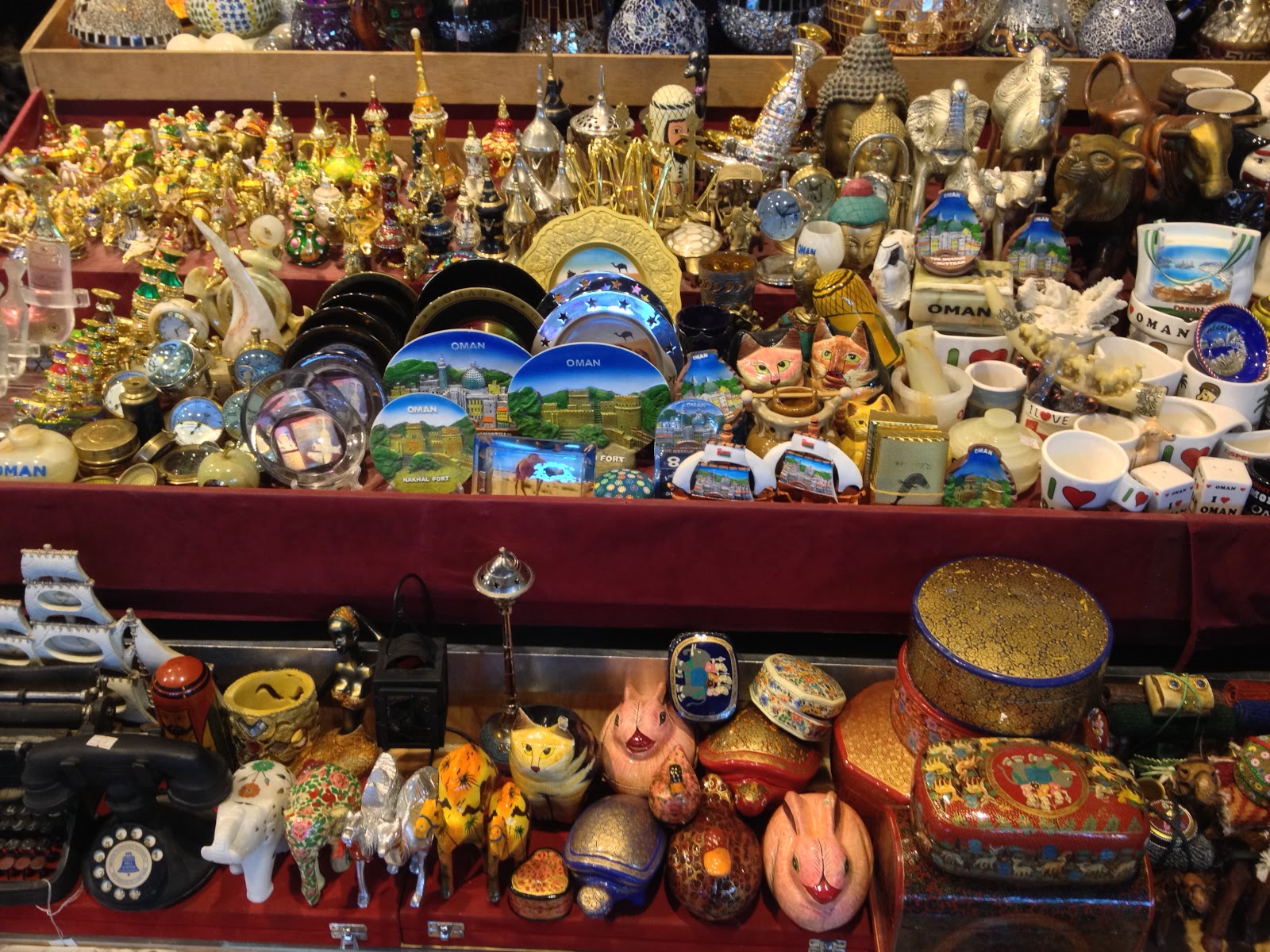
7. Finally, after my colleagues had left I spent a day getting lost in the souq and narrow streets of Muttrah, the atmospheric old port of Muscat. My explorations ended up in Melbourne's Sunday Age newspaper: http://www.traveller.com.au/lost-in-the-old-port-of-muscat-13jlsj.
And that was basically the entire trip, put into words! I love it when a plan comes together.
Friday, 4 December 2015
Lost in the Souq of Muscat, Oman
Muscat, the capital of Oman, is in many ways a modern city. Its low-rise buildings sprawl along the coast of the Gulf of Oman, on the eastern end of the Arabian peninsula.
As a result, it's difficult to get around without driving. But there is one district that's eminently walkable - the old port of Muttrah.
Sitting on a curving harbour and backed by craggy hills, Muttrah is in a scenic location...
... and the gem at its centre is the 200 year old Muttrah Souq. A covered market with shop-lined passages winding in and out from its centre, it's a fascinating place for a wander.
Visiting it none afternoon, I headed away from its tourist-friendly centre toward the Gold Souq section. This is what I saw on the way...
... and then, following a curving passage, I popped out into an alley and daylight:
It took a bit of walking and a certain amount of confidence to find my way onward to the main road from here (I didn't want to retrace my steps).
But, following locals who looked like they knew what they were doing, I had an intriguing glimpse of the secret life of Muttrah.
Friday, 6 February 2015
Cacao & the Writer: My Chocolate-Coated Travel
One of them, I realised the other day, is chocolate.
I was writing a chocolate-related travel article for a major publication, in this case related to London. As I typed, a reference to cacao reminded me that I'd seen a cacao pod in person in Borneo, when I'd visited Malaysia in 2009:
This got me thinking about other times that chocolate had featured in my travels.
In 2010, when Narrelle Harris and I were travelling through Hungary, we dropped into the classic Budapest cafe Gerbeaud. My order was a csokoládé kávé, coffee blended with hot chocolate, amaretto and whipped cream. Alongside it was a perfectly formed slice of Sachertorte:
In May last year I was introduced to great Middle Eastern chocolate, not something I'd been expecting after the terrible chocolate we used to endure when living in Egypt in the 1990s. These locally handmade beauties were on sale at the shopfront of Salma's, a chocolatier in Muscat, Oman:
Closer to home, in 2007 I visited Adelaide and went on a tour of Haigh's chocolate factory. This South Australian brand has several outlets in Melbourne, and it's hard to resist its dark chocolate peppermint frogs. This was the factory shop:
In 2012 I travelled to Quebec City, Canada for the first time and was delighted to discover the Érico chocolate shop and museum, whose exhibits including chocolate clothing:
On the other side of Canada in 2013, Narrelle and I visited an excellent chocolate maker and cafe in Gastown, called East Van Roasters:
And while travelling on the South Island of New Zealand in 2011, I stopped with some colleagues for lunch at She Chocolat, a chocolate-making business with a restaurant overlooking beautiful Governors Bay:
So what's the chocolate-related story I'm writing at the moment? Can't tell you... yet. Follow me on social media (see the links in the right-hand column) to find out when it's published.
I will reveal it has a historic context... and this is how it ends up:
Tasty.
Friday, 23 May 2014
The Bed Report 8: Shangri-La Muscat, Oman Accommodation Review
It feels as if it's a separate town in its own right, as you pass through craggy bare mountains before reaching the resort.
This relative isolation can be a good or bad thing, depending on your vacationing style.
If you're after classy accommodation where you can eat good food and do a lot of relaxing by the pool, it's ideal.
If you want to explore the city, however, it's a bit of a hike - a $25-$35 taxi fare either way, though the resort does run a few free shuttle services to urban attractions including the old port of Muttrah.
You can't fault the resort's setting, strung along a cove between stark brown mountains and the vibrant blue of the Indian Ocean.
It's actually divided into three separate hotels. The Al Waha, at the southeastern end, is the most family-friendly of the three, with a big central swimming pool, a kids' club, and an affordable bistro, Samba, which has a buffet.
In the middle is the Al Bandar Hotel, offering an excellent Middle Eastern buffet at its Al Tanoor restaurant.
At the top end (literally) of the complex is the Al Husn (pictured above). This is the hotel I stayed at, so I'll focus on its facilities here.
Though children can stay at the Al Husn with their families, they can't use the facilities; so for all intents and purposes this is an adults-only hotel. That's not really an issue, as facilities across the other hotels are open to all guests.
The lobby leads to a large central courtyard, a pleasant space set with comfortable lounges. Afternoon tea is served here each afternoon, followed by pre-dinner drinks.
Below the courtyard there's a swimming pool set among palm trees, with the hotel's own private beach down a path further on.
So far, so luxurious. My room continued the upmarket theme, with a comfortable king-size bed and elegant furniture resting on a floor of marble tiles. The balcony overlooked the cove and the other hotels, and had a semi-private vibe.
The bathroom, as expected, was a glamorous riot of marble and L'Occitane products.
I must admit to a fondness for a hotel breakfast, and the spread at the Sultanah restaurant was a good one. A cooked component was available on request, and ranged from omelettes to more unconventional choices involving lamb or Japanese ingredients.
The cold selection was excellent, with plenty of Middle Eastern standards such as hommous and labneh. When in the Middle East, I count a meal wasted if it doesn't have hommous on the plate, so I was happy here.
At nighttime Shahrazad, the hotel's Moroccan restaurant, is a beautiful dimly-lit space in which to eat some excellent North African dishes.
The service at the Al Husn was consistently good and, typically for Oman, involved staff from a multitude of countries - during my stay I interacted with staff members from Oman, India, Sri Lanka, Germany, Britain, the Philippines, Indonesia, Burma and even tiny East Timor.
As you'd expect for its rates, a stay at the Al Husn is a consistently good experience. I noted a few flaws during my stay - low water pressure in my shower, slippery tiles by the pool, an ironing board left out after housekeeping had serviced the room - but my overall impression was of well-maintained, tasteful quality.
It'd make a great alternative to the resorts found in popular tropical destinations, if you'd like to try a relaxing holiday in a different, more dramatic type of landscape.
Just the Facts:
Shangri-La's Barr Al Jissah Resort & Spa
Al Jissah Street, Muscat, Oman
Phone: +968 2477 6666
Web: www.shangri-la.com/muscat/barraljissahresort
Rates: Rooms from $265 per night.
Disclosure time... On this trip I travelled courtesy of Oman Tourism.
Sunday, 18 May 2014
Percussion at the Muscat Opera
On Thursday night I attended a loud, rhythmic performance at the Royal Opera House here in Muscat, Oman.
Only three years old, the opera house is one of the grandest modern buildings in the Omani capital. I'd been on a tour of the interior earlier in the day, and was greatly impressed by its decor.
Arabian art and architecture had been incorporated into the structure without compromising audience access and the technical requirements of performers - even the acoustic padding had been artfully concealed behind attractive wooden screens.
Came the evening, I joined the rest of the audience milling about the foyer before the performance. There was a lot of finery on display, thanks partly to the venue's dress code.
For men, it stipulated either a jacket, or the traditional dishdasha robe with the mussar headdress. There were plenty of both types of garb in the audience, though I had to borrow a jacket from the box office to fit in.
Although opera is staged here, the Royal Opera House is in reality an international arts centre, hosting a wide range of live performances. This night's, entitled Percussion Nights, was a prime example of this diversity.
Before the main event a South Korean group, Noreum Machi, performed in the foyer.
Then, within the lavish auditorium, we saw (and heard!) a drumming performance from the numerous uniformed members of the Military Drum Corps of the Royal Guard of Oman.
A subset of the Royal Guard, the Steel Band, then performed the Phantom of the Opera on steel drums while wearing Hawaiian shirts. No, really.
Egyptian percussionist Said el Artist (nice name) was next, then Turkish musician Murat Coskun performed with artists from Uzbekistan and Iran playing drums which resembled giant tambourines.
This was all rousing stuff, loud and energising.
Considering the distinct, rhythmic beats of Arabian music, it was never going to be a difficult task for percussionists to spark the enthusiasm of an Omani audience, and the performers had no trouble in getting the audience to clap in time whenever they needed our backing.
But the best came after the interval, when every performer - from individuals to the military musicians - added one by one to a joint performance which shook the building with its vibrations.
It was a joyous, loud, fun night at the opera. One that combined international glamour with its own distinctive beat.
Disclosure time... On this trip I travelled courtesy of Oman Tourism. Check out the program of the Royal Opera House Muscat by clicking here.