Showing posts with label London. Show all posts

Sunday, 9 June 2019

Review: The Beaumont, London, UK

I stayed in London as a guest of The Beaumont.


Good ol’ Jimmy Beaumont. When Prohibition hit the USA, he moved to London and gave Mayfair the swellest, swankiest hotel that it had ever seen.

Or... did he?

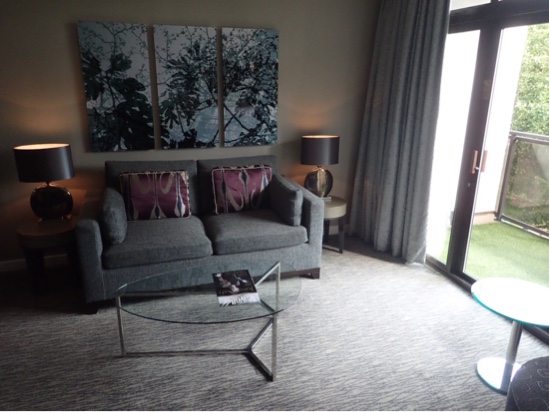
When I arrived at The Beaumont last week for a two-night stay, I was impressed from the start. Everything in my room harmonised in a stylish, Art Deco way, which spoke of decades of devotion to a consistent interwar style:


The 20th century elegance extended throughout the hotel, including the marvellous Magritte Bar and Colony Grill Room, the latter lined by large paintings depicting 1920s New York City and other parts of the USA:


It was delightful. Except, of course, that Jimmy Beaumont was a myth. The Beaumont was not pushing a hundred years old either - it opened just five years ago, in 2014, within (get this) a former parking garage serving customers of the nearby Selfridges department store. 

The garage which opened in 1926 had, fortuitously, a beautiful facade which could be put to other uses - including the addition of Room, a sculpture which looks like a sleeping robot but is in fact the exterior of an unusual hotel room:


This bit of cheeky fun - inventing a colourful founder and then designing the hotel around his imagined tastes and personality - is an approach I thoroughly approve of. As a writer, the storytelling has great appeal; it makes The Beaumont a stimulating place to stay in, as you glance over its interiors with an eye to its fictitious founder.

And if Jimmy never existed, I doubt any of the people depicted in portraits on its corridor walls existed either. Sorry, random naval officer:


Just the Facts:
The Beaumont
Brown Hart Gardens, Mayfair, London, UK
Web: www.thebeaumont.com
Rates: Rooms from A$780 per night.

Friday, 1 February 2019

Stirred, Not Shaken: The London of James Bond

In 2008 I visited London and attended a James Bond memorabilia exhibition at the Imperial War Museum, entitled For Your Eyes Only. 

To flesh it out into a travel feature, I then arranged to join tour guide Simon Rodway's on-demand James Bond tour of Mayfair and St James.

I met Simon [pictured right] a few times over the years after that, taking his 2011 tour about the history of the area around the new Olympic stadium, and corresponding about other matters. 

We got on well, so it was a shock when I discovered last year that he'd passed away from cancer in 2015; you can read his obituary in The Guardian.

As a tribute to Simon's memory, here's the account of his James Bond tour I wrote up in 2008...

Simon Rodway of Silver Cane Tours is a one-man walking tours company, an agent with a licence to stroll. Among his repertoire of walks around the British capital is The London of James Bond, though it focuses more on the life of author Ian Fleming than his fictional creation.

“I don’t know if many people read the books now,” says Rodway as we meet outside Marble Arch tube station, pointing out the author’s work has been overshadowed by the cinematic James Bond’s adventures.

As a result, the walk through well-to-do Mayfair and St James gives Rodway an opportunity to highlight the connections between Fleming’s lesser-known life and the literary 007.


Starting on Park Lane, we head into Mayfair, passing the house where Fleming was born. After that, we pass by Grosvenor Square, home of the American Embassy, a surprisingly hideous concrete fortress.

It’s not hard to imagine spymasters and their agents meeting in this neck of the woods during the Cold War days. In fact, forget the Cold War – Rodway points down the street to the hotel where Russian ex-spy Alexander Litvinenko was poisoned with a radioactive substance in 2006.

A stop outside the Royal Navy Volunteer Reserve club prompts Rodway to speak of Fleming’s wartime role and the way it planted the seeds of James Bond in his mind.

Particularly influential was Fleming’s role as planner for an elite unit of commandos who specialised in intelligence gathering.

According to Rodway, the author was also inspired by Sydney Cotton, a Queenslander in the RAF who was well known for his technical brilliance and innovative gadgetry.

Cotton may well have been the author’s model for Bond’s gadget man ‘Q’.

We stroll through Berkeley Square, beneath its attractive plane trees, to the Fleming Collection.

This family-owned art gallery usually showcases the work of Scottish artists, but today is hosting an exhibition of Bond novel covers from around the world, as part of the the centenary of Fleming's birth. It’s a striking visual reminder of how far and wide 007 has been received over the decades.

As we pass from Mayfair into St James, Rodway mentions an old saw: “St James for the gentlemen, Mayfair for the ladies”.

It’s true that St James Street has a certain masculine identity, with solid, dignified buildings housing gentlemen’s clubs like Boodles, of which Fleming was a member.

It also contains a series of shops outfitting said gentlemen with handmade shoes, fine wine, and hats.

There's even an outlet of Italian firm Beretta, a name familiar to Bond fans as the first gun favoured by the secret agent. There's no sign of weaponry through the ground floor windows - only clothing – but Rodway tells me there’s a gun shop upstairs.

Finally, we reach Dukes Hotel, a tasteful establishment discreetly tucked into a side street.

There's an elegant restraint about the hotel’s decor, its cocktail bar featuring low blue velvet chairs at small circular tables.

It’s a cosy refuge, much favoured by Fleming as he sipped cocktails here, chatted to the waiters and devised the famous line “shaken, not stirred”.

Intriguingly, our waiter, a tall white-jacketed Italian from Elba, tells us firmly that their signature Bond-related cocktail should be stirred, not shaken.

Apparently the agitation would spoil the flavour of the vermouth in the Vesper, a martini devised by Fleming for the first Bond novel.

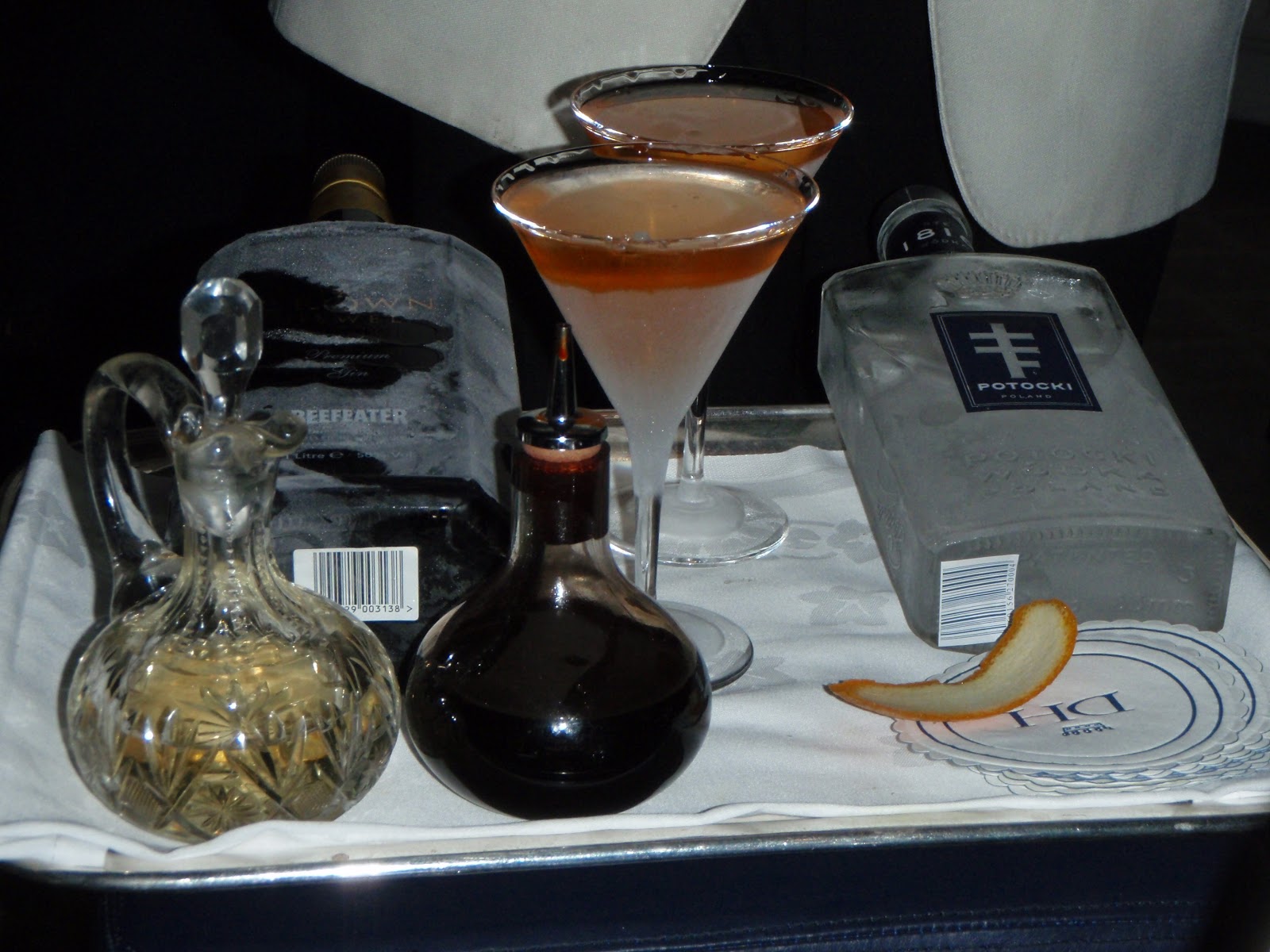
He then proceeds with a flourish to make the concoction at our table, pouring from vast frosted bottles of Beefeater gin and Potocki vodka from Poland.

It’s a potent brew, a strong, bitter cocktail for sipping rather than gulping, served with style (and some tasty green olives).


“This bar was where Sean Connery came in 1961 when he’d landed the movie role, for one of these babies,” says Rodway, holding his cocktail aloft. “Then Pierce Brosnan followed in 1995.”

As I sip my Vesper, I decide I'd rather be a hero than a  Bond villain. Heroes don't get to take over the world, but they do enjoy the better drinks.

Thursday, 2 August 2018

Capital! All the Capital Cities I've Visited

A model of the Houses of Parliament, London,
within the Mini-Europe theme park in Brussels, Belgium.

I was musing the other day about national capitals, those cities in which the government of a country is based.

Often they're the most prominent city of a nation, and thus the most popular destination for international tourists as well: think London, or Paris.

Other times they're not so prominent, though may still draw overseas visitors: Canberra perhaps, or Ottawa. Some capitals are barely known to tourists, who usually visit another part of the country entirely: Suva, Fiji springs to mind here.

Some countries are so big, of course, that you can see quite a lot of them without reaching the capital. I've been to the USA eight times now, and still haven't visited Washington, DC. Nor have I got to Beijing while in China.

Does it matter? Not really, unless you're fascinated by attractions connected with government.

I am, as it goes, because my university degree was in history and politics. So it occurred to me to list in order all the national capitals I've visited, and in what year that visit happened.

Note that I didn't get to the capital of my own nation before visiting that of neighbouring Indonesia. I was living in Perth then, and from there Jakarta was more accessible by air than Canberra in those days!

National Capitals Visited:

1. Jakarta, Indonesia (1981)
2. Canberra, Australia (1989)
3. London, UK (1990)
4. Paris, France (1990)
5. Cairo, Egypt (1992)
6. Budapest, Hungary (1993)
7. Vienna, Austria (1993)
8. Prague, Czechia (1993)
9. Damascus, Syria (1994)
10. Amman, Jordan (1994)

11. Warsaw, Poland (1994)
12. Berlin, Germany (1994)
13. Bangkok, Thailand (1997)
14. Suva, Fiji (1999)
15. Rome, Italy (2001)
16. Vatican City (2001)
17. Wellington, New Zealand (2003)
18. Santiago, Chile (2005)
19. Vilnius, Lithuania (2008)
20. Bratislava, Slovakia (2008)

21. Kuala Lumpur, Malaysia (2009)
22. Ljubljana, Slovenia (2010)
23. Ottawa, Canada (2010)
24. Delhi, India (2011)
25. Dublin, Ireland (2011)
26. Stockholm, Sweden (2012)
27. Seoul, South Korea (2014)
28. Muscat, Oman (2014)
29. Brussels, Belgium (2014)
30. Singapore (2015)

31. Copenhagen, Denmark (2016)
32. Kiev, Ukraine (2016)
33. Pretoria, South Africa (2018)... though South Africa is more complicated, as its Parliament actually sits in Cape Town, and its judiciary in Bloemfontein.

And I'm hoping to be in Tokyo before the end of the year! Capital.

Friday, 15 September 2017

Review: Jumeirah Carlton Towers, London

Disclosure: I was hosted by the Jumeirah Carlton Towers.

Narrelle and I started this trip with two nights at the Langham Hotel, then yesterday Ubered around to Belgravia for two nights at the Carlton.

The Carlton Towers was not a hotel I knew anything about, and its postwar exterior doesn't do much to catch the eye. But the location, near Knightsbridge Tube station, Harrods and Hyde Park, is appealing; and the rooms are lovely.

This is the interior of our Junior Suite, basically a joined bedroom and sitting room, with a balcony overlooking the leafy Cadogan Place Gardens (a private space, but one that hotel guests have access to)...

img-alternative-text

The room is very pleasant, the decor a nicely-judged mix of classical elements and modern lines. Very tasteful and soothing, as is the garden view from the balcony.

As for the hotel's public spaces, there's an ambient cafe/lounge off the lobby called the Chinoiserie (whose central tree is re-dressed as each season changes)...

img-alternative-text

... and a restaurant which is about to undergo a major refurbishment. It's a pleasant spot in which to have breakfast, and there are hints of the hotel's Middle Eastern ownership in the spread: including hommus, labneh, etc.

img-alternative-text

Other guest facilities include a pool with a view...

img-alternative-text

... and on the 9th floor, alongside the wellness centre and gym, is The Peak. This is an unexpectedly light-filled space with great views across London to the south. Appealed to me as a great place to sit and write.

img-alternative-text

The hotel is, as you will have guessed, not cheap. But it's in a great location, and manages to be surprisingly serene in the centre of such a busy city.

The Jumeirah Carlton Towers is located at 1 Cadogan Place, Belgravia, London. Find more info and make bookings at the Jumeirah website.

Friday, 9 September 2016

Postman's Park: Where London's Lost Heroes Live On

I paid my own airfare to the UK, and received discounted accommodation at the Ibis London Blackfriars.

When I was last in the UK in 2014, Narrelle Harris and I paid a visit to Postman's Park.

This small park near St Paul's Cathedral was given its name because it was established opposite the General Post Office building (later demolished in 1912).

It's notable not for its connections to postmen, however, but for its connections to heroes.


The park was opened in 1880 on the former churchyard of St Botolph's Aldersgate church, and was later expanded to take in churchyards from two demolished churches.

In 1900 it gained its unique central feature, the Memorial to Heroic Self Sacrifice erected by the artist George Frederic Watts.

The memorial takes the form of a long wall, on which are affixed ceramic tablets commemorating people who died while saving others.


It's a very moving place to visit. For a start, the park itself is green and quiet. Being a former churchyard, there are old gravestones placed by the sides, a sombre reminder of its original purpose.


The memorial wall itself is the highlight of the park. It's very touching to read the simple messages detailing noble sacrifices from a bygone age.

Several, for example, speak of people who were drowned while saving others, as you can see below:


Sadly, the project declined after the death of Watts' widow Mary in 1938, with the last memorials of that era erected in 1931.

In 2009, however, the wall saw a new tablet added in memory of a man who'd died after rescuing a drowning boy in a canal in 2007. It remains to be seen whether more memorials will follow.

Next time you're in central London, take a moment to visit Postman's Park. It's one of those quiet corners of the great metropolis in which you can sit and catch your breath, and its stories of noble sacrifice are inspiring.

Postman's Park is located next to 1 St Martin's Le Grand, London, with entrances from St Martin's Le Grand and King Edward Street. Find more details at postmanspark.org.uk.

Friday, 5 February 2016

A Travel Writer's Reading Holiday in Lorne, Australia


In mid-December I took a short holiday in Lorne, an attractive coastal town on Victoria's Great Ocean Road.

The eccentric timing was the result of something I'd noticed a couple of years before - two weeks before Christmas Day, accommodation prices at the Mantra Lorne hotel drop to very reasonable levels.

I assume that represents the lull before the storm: for that brief period, business travel has ceased for the year, and the summer wave of vacationers hasn't yet hit.

Whatever the reason, I decided I'd take advantage of it to take a reading holiday. It was also largely a technology detox as well.

Aside from a little social media in the mornings at the Swing Bridge Cafe (pictured above), I placed the phone and tablet in a drawer while I read a number of books in print, and on my unconnected Kindle device.

For some reason I'd decided to go on a travelogue jag. Well, not entirely without reason. I often work at the Docklands Library in Melbourne, and pass through the travel section on the first floor.

On doing so recently my eye had been caught by a book about a trip to Timbuktu, and I'd started reading it in installments once I'd finished my work each day.

So I took it with me to Lorne, along with a number of other interesting works. Here's what I thought of them (with an Amazon link for each if you'd like to buy them or learn more). 

1. To Timbuktu for a Haircut; by Rick Antonson

This was a fun read. The author is a travel industry professional from Canada, who becomes obsessed with travelling to Timbuktu in the west African country of Mali.

This is not a journey made casually; part of his complex preparations involve liaison with a Malian 'fixer' who turns out to present his own challenges. Antonson does a good job of placing us in his shoes, dealing with the inevitable difficulties while relating the fun and the interesting characters he meets on the road.

I appreciated him being the sort of travel writer who's happy in the company of others, both Malian and foreigner, rather than the Theroux-type who shuns all Westerners; it's a more relatable kind of travel.

2. Stranger on a Train; by Jenny Diski

I loved this book, echoing as it did my recent long-distance train journey up the west coast of the USA. In it, British writer Jenny Diski decides to circumnavigate the USA aboard Amtrak trains.

Because she's a smoker, she finds herself frequently exiled to grim grey smoking rooms within each train. There she meets the most extraordinary collection of fellow travellers, each with their own eccentricity or outright psychological problem.

She's had her own experience of mental illness, and comes to find the long-distance train - with its strange sensation of existing outside the normal world of time and space - as a kind of refuge which allows her to forget the problems of the 'real world' and open up to strangers. A great read, as much memoir as travelogue.

3. Against the Flow; by Tom Fort

In 1990, this British writer and keen fisherman decided to drive across Eastern Europe in the aftermath of the fall of the Berlin Wall, fishing and meeting locals along the way. Two decades later, he returns to fish some more and see how the region has changed.

It's a well-written 'then and now' account which I could relate to strongly, having lived in Poland in 1994 and then revisiting it regularly from 2006 onwards. I'm not much interested in the angling detail, but Fort does a good job of painting the people he meets, and it's good to see what happened to them after that first encounter.

The only sour note for me is the writer often striking a note of 'it was simpler and better back in 1990', when of course it was actually poorer and more deprived for the locals. He does redeem himself by acknowledging this contradiction later in the book, however.

4. This Other London; by John Rogers

I'm always interested in books promising to uncover secrets of London. It's such an old, layered and complex city that there's always something more to learn about it.

In this book, the writer stages a series of 'expeditions' to outer London, exploring areas that were generally towns and countryside outside London before the Industrial Revolution. Walking from Gunnersbury to Hounslow Heath, or from Lewisham to Tulse Hill, he passes stately homes, converted factories, lost sacred wells, Roman roads and buried rivers.

I find him frustratingly reticent to talk to locals; so it's more about his own thoughts and reactions than those of people he meets along the way. However it's all fascinating material, almost completely through parts of London off the tourist map, which I haven't visited at all.

5. Reckoning; by Magda Szubanski

Though it's not a travelogue, this autobiography by Australian comedian Magda Szubanski contains a fair bit of travel.

As part of her account of growing up as the daughter of a Polish father and Scottish mother, she explores her father's past and his activities as part of the Polish resistance against the German military during World War II.

Visiting Poland several times, during communist rule and after the fall of the regime, the author gradually unravels those dark times and comes to understand her father better as a result.

It's an excellent read, both for Szubanski's natural, honest turn of phrase, and for an insight into the complexities of family life and its tensions.

Getting so much read in such a short time has partially turned me back toward the pleasure of reading print books to escape from the endless short-focus demands of social media and email (though I do still love my Kindle).

There's always next year's reading vacation to look forward to... 

Friday, 11 December 2015

One Trip, Multiple Stories: A Travel Writer's Journey to Europe & the USA

For the journey detailed below, I paid for my airfares and received on-the-ground assistance from local tourism authorities and hotels. Full disclosures are included with each linked article and blog post.

This is my 400th post at Aerohaveno. Eight years ago I started this blog, somewhat reluctantly, then realised it was a valuable additional outlet for my travel writing.

I've managed to keep the output consistent over that time, averaging precisely 50 posts per year. Often I post about topics which I haven't been able to cover in my work for newspapers, magazines and websites.

For the 400th post, I'd like to do something a little different - draw back the curtain on the mechanics of my trade.

Focusing on a four-week travel writing research trip I undertook in 2014 to Europe and New York, I'll outline how each activity led to a specific piece of writing - with a link to the published article or blog post.

Are you sitting comfortably? Then we'll begin.

Thursday 21 August 2014

Activity: Fly Qantas flight QF9 from Melbourne to London Heathrow.
Resulting story: A 'Flight Test' review of Qantas' Premium Economy class for the Traveller section of Fairfax Media's Saturday newspapers in Australia.

Activity: Check out the Qantas First Class lounge at Melbourne Airport before the flight.
Resulting story: A review of the lounge, here at Aerohaveno.

Saturday 23 August 2014


Activity: Visit London's Cartoon Museum for an exhibition of World War One cartoons.
Resulting story: A 'Postcard from London' piece for the Spectrum (culture) section of The Age newspaper in Melbourne.

Sunday 24 August 2014


Activity: Visit Abbey Road, West Ham, to investigate local attractions.
Resulting story: An article on the "wrong" Abbey Road, for the Traveller section of the Sun-Herald newspaper in Sydney.

Activity: Take the Gentleman's Afternoon Tea at The Athenaeum Hotel, Mayfair.
Resulting story: A blog post about the experience, here at Aerohaveno.

Monday 25 August 2014

Activity: Visit Hampton Court Palace, to check out the newly reopened chocolate kitchens.
Resulting story: An article on the experience, for the Traveller section of the Sun-Herald newspaper in Sydney.

Tuesday 26 August 2014


Activity: Eat at restaurants in Cardiff, Wales, which specialise in dishes using locally-sourced ingredients.
Resulting story: An article on Cardiff dining for the Traveller section of Fairfax Media's Saturday newspapers in Australia.

Activity: Visit the Doctor Who Experience, Cardiff Bay.
Resulting story: A review of the exhibition, here at Aerohaveno.

Wednesday 27 August 2014


Activity: Explore Cardiff's Victorian-era shopping arcades.
Resulting story: An article on the various arcades and their charms, for the travel section of the Sunday Age newspaper in Melbourne.

Thursday 28 August 2014

Activity: Check into the Ibis London Blackfriars.
Resulting story: A review of the hotel, here at Aerohaveno.

Friday 29 August 2014


Activity: Join the Eating London Tour from Spitalfields Market, London.
Resulting story: An article on the tour's food highlights, for the travel section of the Sunday Age newspaper in Melbourne.

Saturday 30 August 2014


Activity: Investigate several unusual aspects of the London Underground.
Resulting story: An article on secrets of the London Underground, for the Traveller.com.au website.

Sunday 31 August 2014

Activity: Catch Eurostar train from London to Brussels, Belgium (then later on to Cologne and Berlin).
Resulting story: An article on the rail journey and the cities visited, for Get Up and Go magazine.


Activity: Visit the Mini-Europe theme park in Brussels.
Resulting story: An article on the park's quirky appeal, for the travel section of the Sunday Age newspaper in Melbourne.

Monday 1 September 2014


Activity: Visit the Waterloo battlefield outside Brussels.
Resulting story: An article on the 200th anniversary of the Battle of Waterloo, for the Lonely Planet website.

Activity: Explore central Brussels.
Resulting story: An account of my experiences of the city, here at Aerohaveno.

Wednesday 3 September 2014


Activity: Visit Museum Ludwig in Cologne, Germany.
Resulting story: An article on the museum's impressive modernist collection, for the travel section of the Sunday Age newspaper in Melbourne.

Activity: Soak at the Neptunbad baths, Cologne.
Resulting story: A review of these historic baths, here at Aerohaveno.

Thursday 4 September 2014

Activity: Explore central Berlin, Germany.
Resulting story: An account of my wander from the Hauptbahnhof to the Hotel Adlon, here at Aerohaveno.

Friday 5 September 2014


Activity: Join a tour of Berlin street art, led by an artist.
Resulting story: A 'Postcard from Berlin' piece for the Spectrum (culture) section of The Age newspaper in Melbourne.
Second resulting story: A blog post about Berlin's street art, here at Aerohaveno.

Saturday 6 September 2014


Activity: Explore the remnants of the Berlin Wall along Bernauer Strasse.
Resulting story: An article on the Berlin Wall Memorial, for the travel section of the Sunday Age newspaper in Melbourne.
Second resulting story: A blog post for the 25th anniversary of the Berlin Wall's fall, here at Aerohaveno.

Monday 8 September 2014

Activity: Fly British Airways flight BA173 from London Heathrow to New York JFK.
Resulting story: A 'Flight Test' review of British Airways' Premium Economy class for the Traveller section of Fairfax Media's Saturday newspapers in Australia.

Activity: Check into the Z Hotel, Queens.
Resulting story: A post about the rooftop bar's amazing view of Manhattan, here at Aerohaveno.

Tuesday 9 September 2014


Activity: Visit Little Collins, an Australian-run cafe in Manhattan (and four others in the following days).
Resulting story: An article on Aussie cafes of Manhattan, for the travel section of the Sunday Age newspaper in Melbourne.

Wednesday 10 September 2014


Activity: Visit the newly-opened Morbid Anatomy Museum, Brooklyn.
Resulting story: A 'Postcard from New York' piece for the Spectrum (culture) section of The Age newspaper in Melbourne.

Activity: Take a cruise to Ellis Island.
Resulting story: A review of the island's immigration museum, here at Aerohaveno.
 
Thursday 11 September 2014

Activity: Explore the Bushwick neighbourhood of Brooklyn.
Resulting story: An article on the attractions of the area [accepted but as yet unpublished].

Friday 12 September 2014


Activity: Visit the newly-reopened Queens Museum in Flushing Meadows.
Resulting story: An account of the museum and its history, for the Traveller section of the Sun-Herald newspaper in Sydney.

Saturday 13 September 2014


Activity: Join the Greenwich Village Literary Pub Crawl, a regular literary tour.
Resulting story: An article on the tour, for the travel section of the Sunday Age newspaper in Melbourne.

Monday 15 September 2014

Activity: Fly Qantas from New York JFK to Los Angeles (then home to Australia).
Resulting story: A review of Qantas' Premium Economy class, here at Aerohaveno.

I also wrote two general blog posts about a selection of quirky New York elements:
And that's that! Courtesy of the International Dateline, we arrived home on Wednesday 17 September 2014 - just short of four weeks since we'd left.

Writing output, financial income

By my count, the trip produced a total of 20 paid articles for outside publications, and 14 posts on this blog.

If you're interested in the business side of such things, I calculate the paid articles (less the one unpublished piece) earned a total of $9727.30 before adding GST (sales tax) for both words and photos.

About another $400 should come in from the final article, taking it over the $10,000 mark. And there was additional research undertaken on the trip which I may yet write about, as well as revisiting subjects in a fresh way.

The blog posts don't earn any direct income, but drive traffic to Aerohaveno and thus contribute to the occasional small payments I receive from the Google Ads running on my blog.

Expenses

Of course I had sizeable expenses on such a journey, especially in New York where I received less assistance re hotel accommodation.

Including airfares, I estimate my total expenses on this trip at $6450, which leaves a profit of about $3677 (plus possible income from future stories derived from the same research material.)

Some trips have a greater return on outlay, others less so. This one had higher expenses than I usually incur, mostly because I paid for my own flights; but was a great experience and turned up lots of interesting travel articles.

It's not easy to make a living from travel writing; but if you can wring a story a day from a trip, you're off to a decent start.

Having typed all that, I feel exhausted! I'll be giving Aerohaveno a rest over the holiday season, and will be back with you in early January. Have a great New Year!